How EDGE remotely monitors oil spill containment ponds with Myriota FlexSense and radar sensors
8 Oct 2026
EDGE, an industrial IoT solutions provider based in Argentina, implemented Myriota’s FlexSense – our rugged, low-power satellite-connected sensor platform – together with radar sensors to remotely monitor oil spill containment ponds in the field. The solution captures periodic measurements and transmits the data without requiring continuous external power or frequent site visits.
The implementation demonstrates how low-power IoT sensing can support remote monitoring in Oil & Gas environments, including applications where sensors need to operate for extended periods on battery power.
The challenge: monitoring oil spill containment pits remotely
Oil & Gas operators need periodic visibility into the level of liquid accumulated in containment ponds to detect changes early, maintain available capacity, and manage environmental and operational risks.
These ponds, also known as sumps, are installed next to scraper traps used for the periodic cleaning of pipelines. During normal operations, when the trap is opened to remove the scraper, a small amount of hydrocarbon or residual liquid may be released. The sump is specifically designed to safely contain this liquid, making this a controlled release as part of the normal operation.
Because the ponds are located outdoors, they can also accumulate rainwater. Following significant rainfall, a vacuum truck may need to be dispatched to empty them.
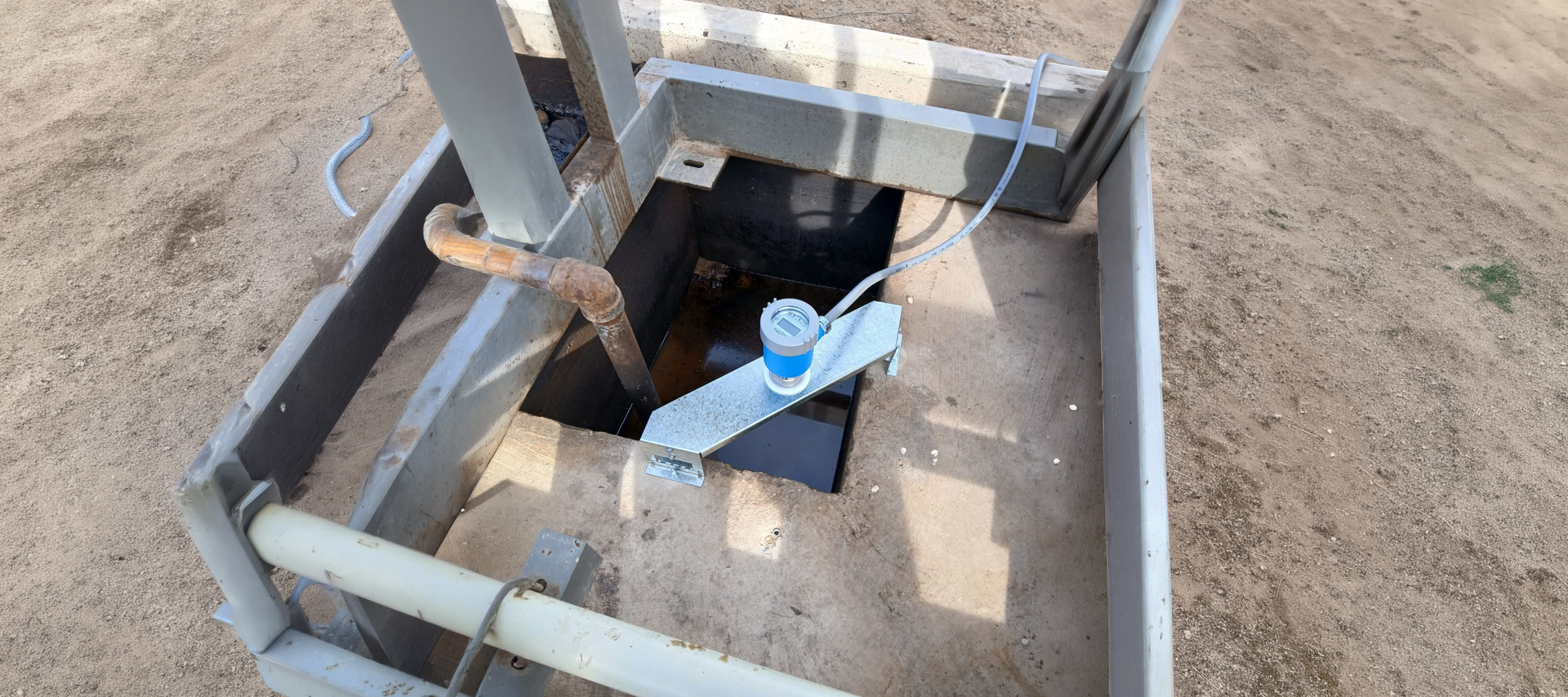
For this reason, it is important to keep the ponds as empty as possible, ensuring that sufficient capacity is always available to contain a new release or accumulated rainwater.
This monitoring becomes particularly important in facilities with a large number of ponds distributed across different areas of an oil field. In this case, one of EDGE’s customers has approximately 50 containment ponds, located considerable distances from one another.
Before implementing the solution, monitoring was entirely manual. An operator would travel to the different installations, visually inspect the level of each pond, and then report its status via WhatsApp or phone. If a high level was detected, a vacuum truck would be requested to empty the pond.
This process required frequent trips to remote and dispersed installations, while the detection of high liquid levels depended on the frequency of on-site inspections.
EDGE needed to connect a radar sensor to a low-power device that could operate reliably in remote field conditions. The radar introduced an additional challenge: it requires approximately 50 seconds per measurement cycle, which is considerably longer than the typical operating window of many low-power sensing applications.
The Solution: FlexSense connected to a radar sensor
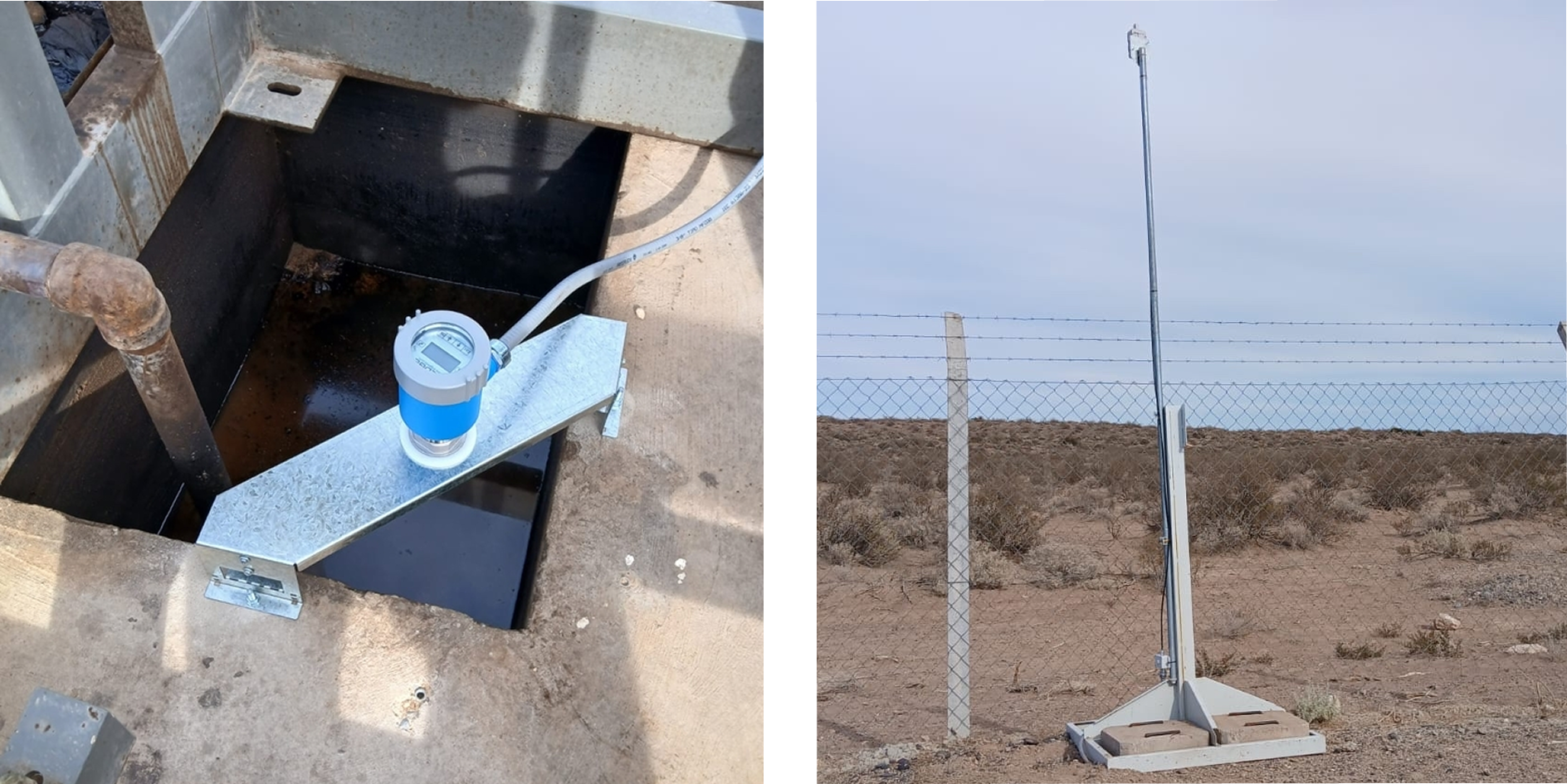
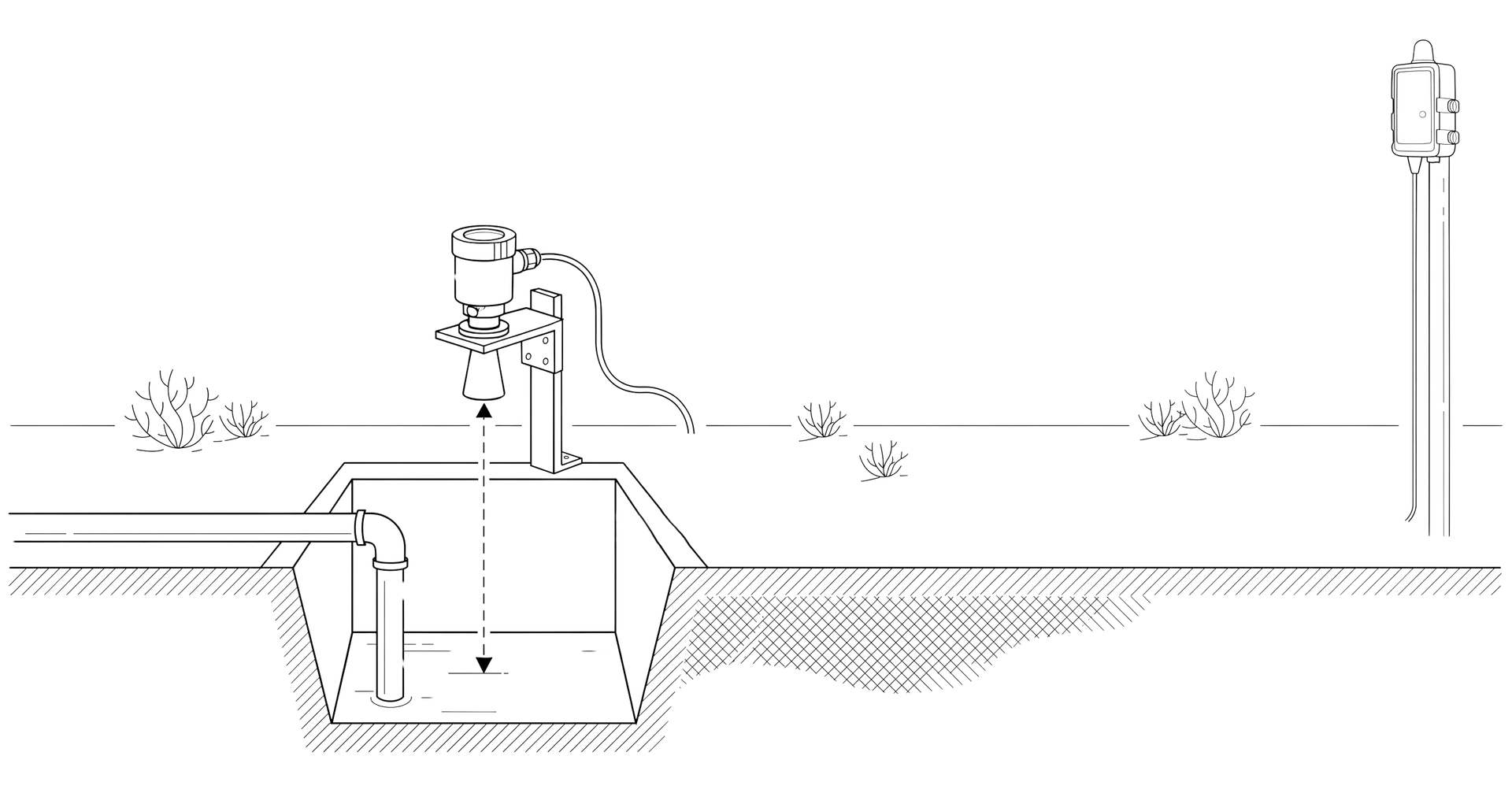
EDGE connected a radar sensor to Myriota’s FlexSense – a and extended the FlexSense wake-up window to match the radar’s measuremenEDGE connected a radar sensor to Myriota FlexSense and extended the FlexSense activation window to accommodate the radar’s measurement cycle. The system operates in three steps:
- Measurement. FlexSense activates the radar sensor and keeps it powered throughout its approximately 50-second measurement cycle. The radar measures the liquid level inside the containment pond.
- Transmission. Once the measurement is completed, FlexSense transmits a reading once per hour over the Myriota satellite network, enabling remote monitoring of each pond without requiring cellular connectivity at the site.
- Monitoring and alerts. The data received is integrated into the EDGE dashboard, where operators can view the level of each pond and configure different alert thresholds and critical levels. When one of these thresholds is reached, the system automatically identifies which pond requires attention and enables the team to coordinate the dispatch of a vacuum truck.
With the current solution, a process that previously required on-site inspections is performed automatically. The radar measures the liquid level, and Myriota FlexSense remotely transmits the information to EDGE’s dashboard.
The Result: Remote monitoring and more efficient management
The solution gives operators periodic visibility into the status of approximately 50 containment ponds distributed across the oil field, without relying on manual site visits to determine their liquid levels.
The main benefit is not only the ability to remotely know the level of each pond, but also to reduce unnecessary site visits, improve response times, and ensure that the ponds maintain sufficient capacity to contain new releases or accumulated rainwater.
By automating measurements and generating alerts based on configured thresholds, EDGE can help transform a manual inspection process into a remote, data-driven monitoring system.
The case also demonstrates the flexibility of Myriota FlexSense to integrate with sensors that require longer power-on windows. In this application, the ability to keep the radar powered throughout its approximately 50-second measurement cycle makes it possible to combine radar-based level sensing with low-power satellite connectivity for an Oil & Gas application in remote locations.
About EDGE
EDGE, based in Córdoba, Argentina, builds industrial IoT solutions for remote asset monitoring, combining sensors, hardware, software and connectivity. The company works across oil and gas and agriculture.