The total cost of ownership in asset tracking: Why hardware durability matters.
14 Sep 2026
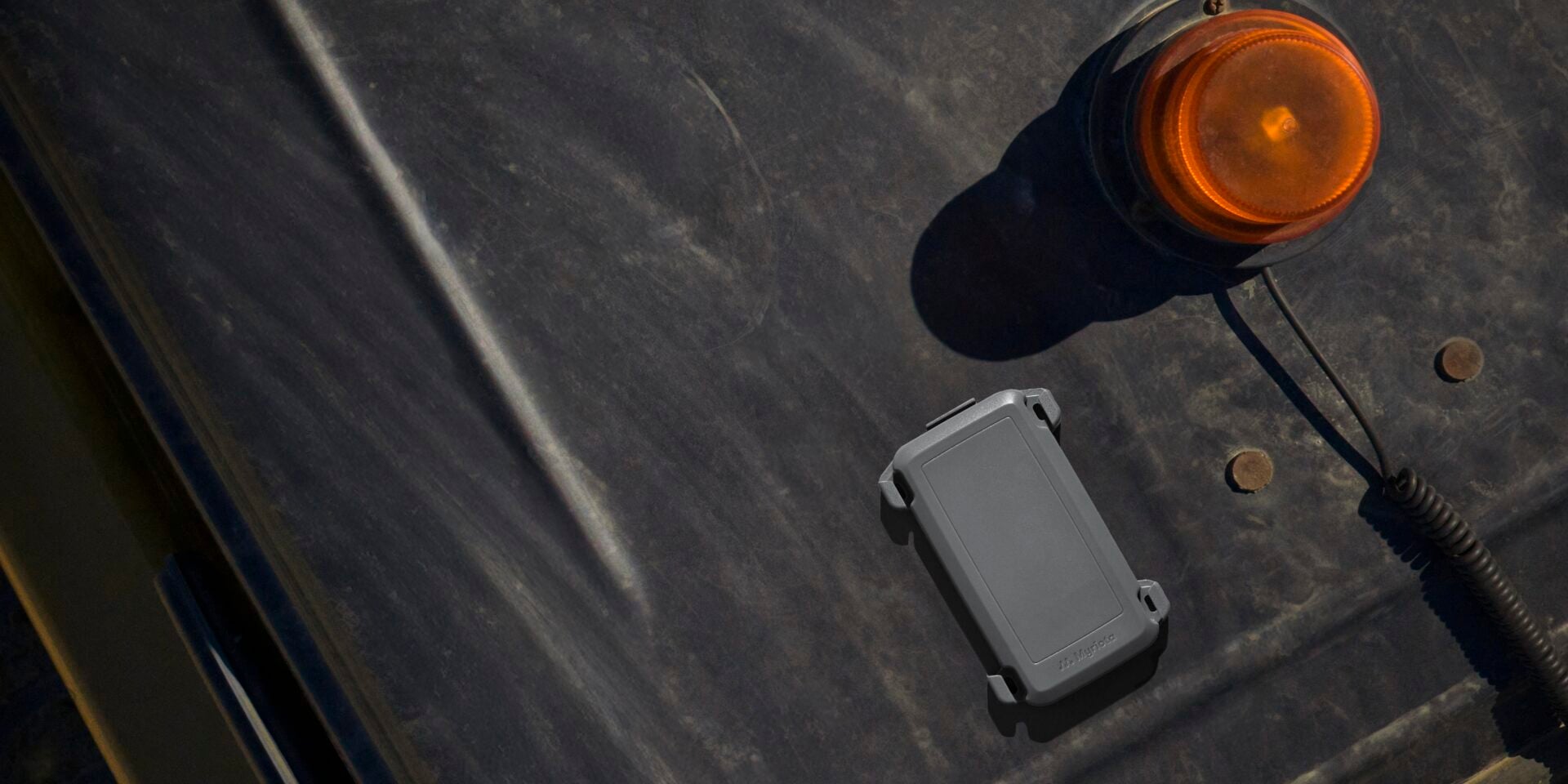
Total cost of ownership (TCO) in asset tracking isn’t just about the unit price. Field maintenance, replacement cycles, and downtime from device failure can all have an impact. Ruggedised hardware lowers TCO by cutting all three. For large fleets operating in extreme environments, tracker durability matters as much as connectivity or battery life.
AssetHawk™, Myriota’s hybrid satellite + cellular tracker, was engineered in Australia for exactly these conditions. It carries IP68 and IPX9K certification – protection against dust ingress and high-pressure, high-temperature water jets – and up to 10 years of battery life, reducing the maintenance burden on large-scale deployments.
How does hardware durability affect the TCO of asset tracking?
For large deployments, the cost of an asset tracker isn’t just the purchase price. Total cost of ownership includes the hardware itself, installation, battery replacement, field servicing, device replacement and the operational impact of losing tracking visibility.
| Cost driver | How hardware failure increases cost |
| Replacement hardware | Failed devices need to be replaced |
| Site visits | Technicians may need to travel long distances to access the asset |
| Labour | Field service and refits are expensive |
| Downtime | Loss of tracking visibility can increase operational risk |
| Battery replacement | Shorter battery life creates additional servicing requirements |
| Logistics | Replacement devices need to be shipped and installed |
For a single device, these costs may be manageable. Across thousands of assets, even a small number of failures can create a significant field-service burden.
This is why hardware durability matters to the economics of asset tracking. A tracker that can remain operational for longer, with fewer interventions, can help reduce the cost of maintaining a large-scale deployment.
As part of AssetHawk’s engineering and design validation, Myriota tested the device through a NATA-accredited laboratory to IP68 (IEC 60529) and IPX9K (ISO 20653) standards to verify its resilience in demanding environmental conditions.
What does IPX9K mean for an asset tracker?
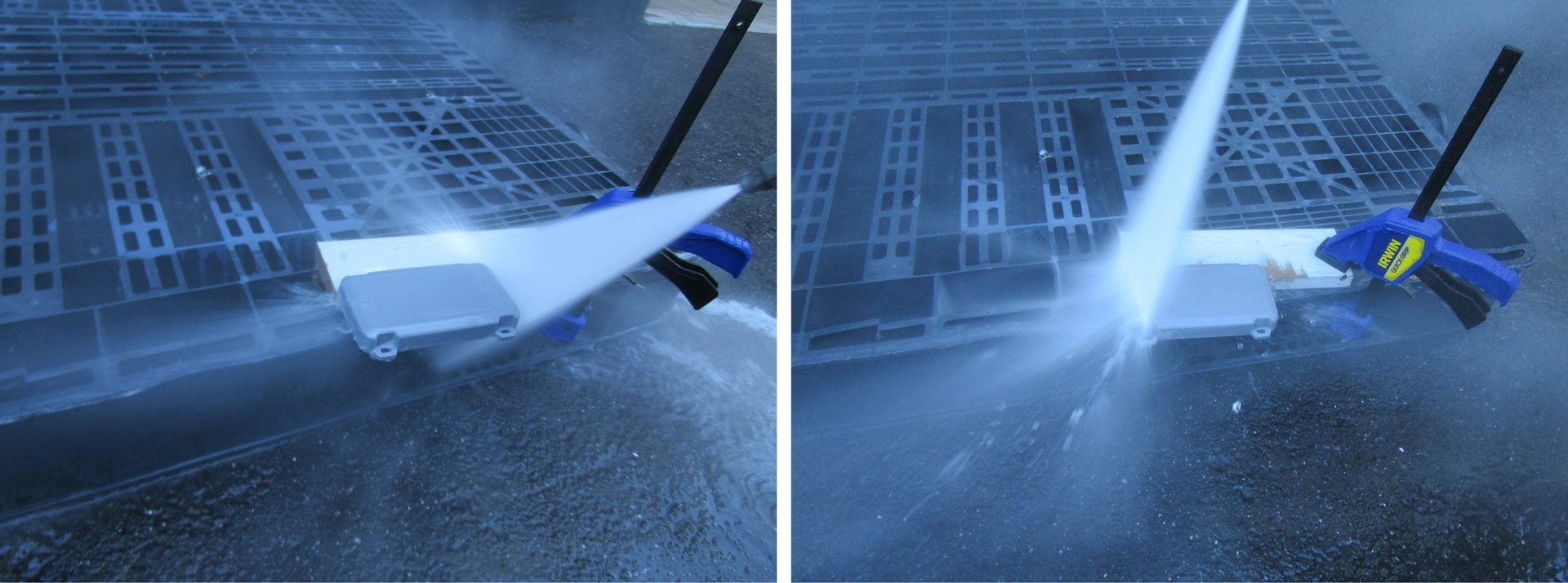
IPX9K testing evaluates an enclosure’s resistance to high-pressure, high-temperature water jets. This is particularly relevant to industrial equipment that is routinely exposed to pressure washing and demanding washdown environments.
In heavy industries like construction, logistics, and equipment rental, assets are routinely blasted with high-pressure industrial washers. If water penetrates the housing, internal electronics short out, leading to unbudgeted site visits and asset downtime.
- IP: Stands for Ingress Protection and describes the degree of protection provided by an enclosure against the intrusion of solid foreign objects and water.
- X: Indicates that no dust-protection rating is specified with the IPX9K rating itself – although it’s often paired with a dust rating like IP68 – as AssetHawk is.
- 9K: Represents protection against high-pressure, high-temperature water jets under the specified test conditions.
How was AssetHawk tested for high-pressure washdowns?
During design validation, as prescribed by ISO 20653, AssetHawk was subjected to water jets at numerous defined angles, 10-15 cm away, operating at 80-100 bar pressure (over 40 x standard tyre pressure) and water temperatures reaching 80°C (176°F). Additionally, the testing involved AssetHawk rotating 360 degrees every 12 seconds during testing to expose all angles to integrity testing.
AssetHawk successfully passed the IPX9K testing, demonstrating resistance to high-pressure, high-temperature washdown conditions.
For equipment operating outdoors or in environments exposed to water and regular washdown, protection against water ingress can help reduce the risk of water-related hardware failure and the associated maintenance burden.
What does IP68 mean for asset tracking?
IP68 means an enclosure has been tested for protection against dust and water ingress under IEC 60529 specified conditions. AssetHawk was tested at an immersion depth of 1m for 1 hour, which exceeds the minimum time required for IP68. Dust and dirt are significant considerations for asset trackers operating in remote industrial environments. Fine particles can enter poorly sealed enclosures, potentially affecting sensitive electronics and accelerating device failure.
To achieve its IP68 rating, AssetHawk was tested against mechanical and dust intrusion:
- Mechanical intrusion: Testing was performed across housing seams and seals with a 1mm rigid steel probe to validate solid object resistance.
- Dust Exposure: AssetHawk was subjected to an 8-hour-long exposure inside a dust chamber with Talcum powder particles measuring less than 0.075mm (75µm) to validate that it is dust-tight, ensuring that micro-particles cannot bypass the enclosure’s sealing system and compromise internal components.
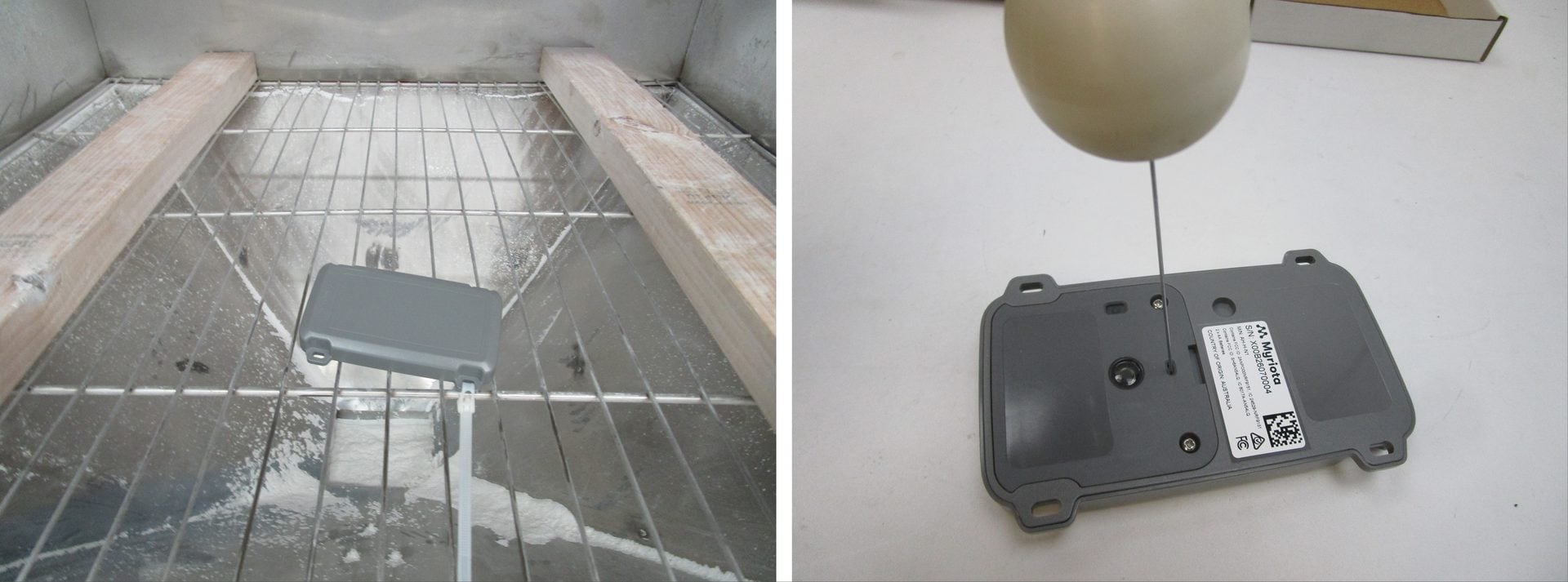
Together, these tests help validate AssetHawk’s ability to withstand the environmental conditions encountered in demanding industrial deployments.
“We don’t get to pick where these devices are deployed, so we designed AssetHawk for the worst conditions. A failure in the field is never just a failed device. It’s someone driving hours out to replace a device that should have kept working. That’s why we tested AssetHawk so thoroughly – , so our partners don’t have to worry about this.
– Mathew Strydom, Project Lead, Myriota
Engineered for long-life asset tracking
AssetHawk combines ruggedised hardware with low-power architecture, delivering up to 10 years of battery life on standard AA batteries. Its hybrid cellular + satellite connectivity is designed to extend tracking beyond areas served by terrestrial cellular networks.
For solution providers deploying tracking at scale, the economics depend on more than the upfront price of the device. Hardware durability, battery life, connectivity and ongoing maintenance all influence the lifetime cost of a deployment.
AssetHawk brings these capabilities together in a single asset tracking platform, engineered for demanding environments and priced for scale. It enables fleet management organisations, solution providers and systems integrators to deploy reliable tracking across more assets while keeping the ongoing operational burden low.
Learn more about AssetHawk or get in touch for a demo enquiries@myriota.com.