Myriota completes lunar-ready IoT payload, extending connectivity beyond Earth
21 May 2026
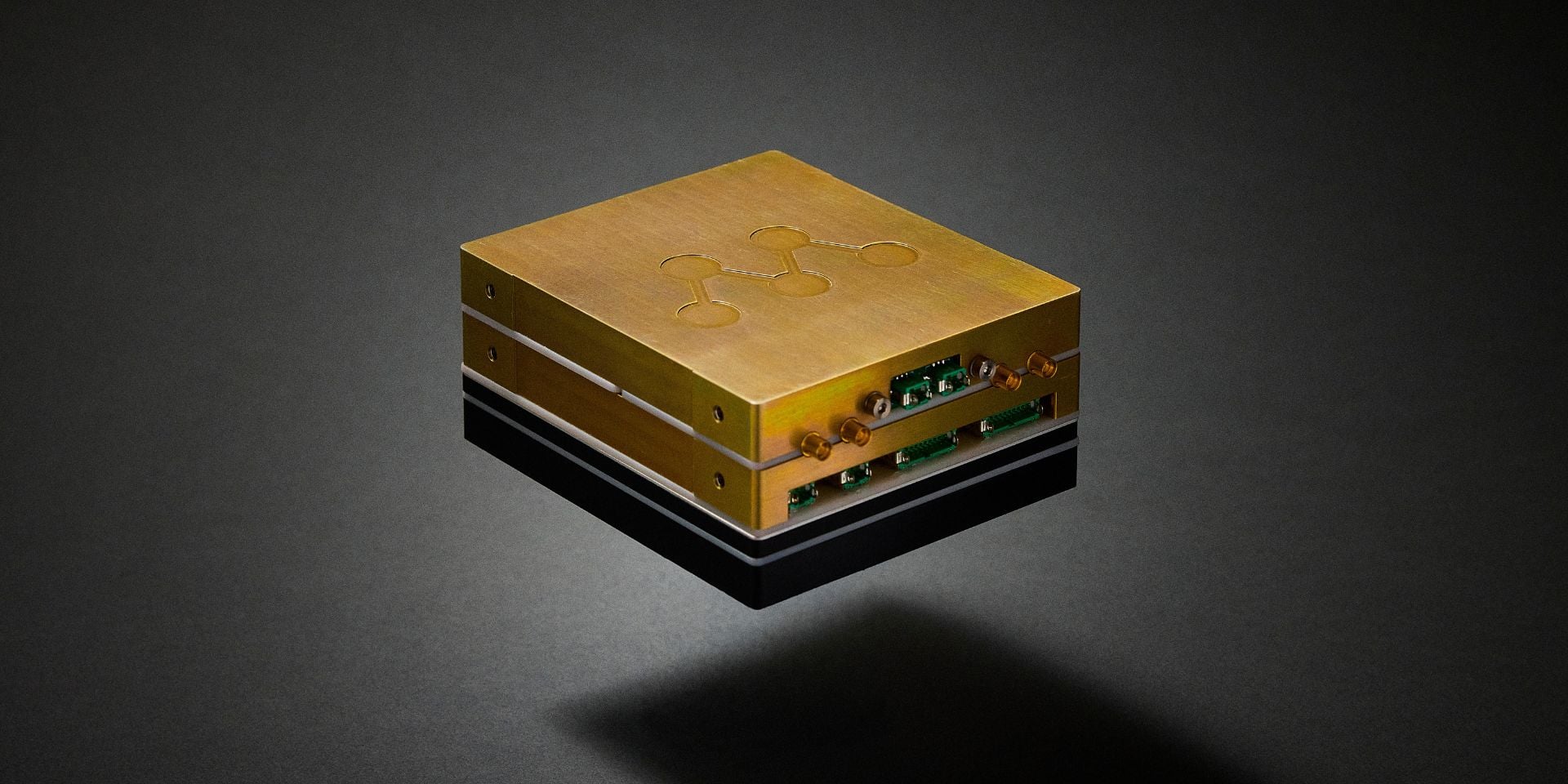
ADELAIDE, AUSTRALIA [21 May 2026]: Myriota, the global leader in low-power, secure satellite IoT connectivity, has successfully completed its Next-Generation Communications Payload – marking a significant step in extending IoT connectivity beyond Earth.
Developed with support from the Australian Government’s Moon to Mars Demonstrator Mission program, the project represents a first-of-its-kind Australian-built payload designed to deliver scalable, low-power IoT communications in space. The program is accelerating a new generation of sovereign space capabilities, enabling Australian companies to design, qualify, and operate technologies beyond Earth while building critical space heritage.
For Myriota, the milestone builds directly on its proven satellite IoT networks, which already deliver secure, ultra-low-power connectivity across the globe, including the world’s most remote and infrastructure-constrained environments. This same capability – enabling sensing, tracking, and monitoring of assets at global scale – now extends into off-Earth applications.
The newly completed payload is designed for deployment in low lunar orbit, where it will provide resilient, flexible, and scalable communications for missions on and around the Moon. Potential applications include astronaut health monitoring, lunar robotics, and inter-payload connectivity – supporting both government and commercial space operations.
Importantly, the program is also accelerating Myriota’s innovation roadmap. Advances in signal processing, system architecture, and payload design will directly enhance the performance, scalability, and efficiency of Myriota’s Earth-based IoT services.
The payload represents a significant evolution of the technology previously flown on the South Australian satellite Kanyini in 2024. While that system was mission-specific, this next-generation design introduces a modular, scalable architecture that can be deployed across multiple satellite platforms and configured for increased compute capacity.
Enrico Palermo, Head of the Australian Space Agency said:
“For years, Myriota’s space-enabled IoT technology has been making a difference in critical sectors like agriculture, environmental management, and meteorology. This payload represents that same ingenuity taken to the next level and exemplifies how Australia is ready to contribute to the future of exploration beyond Earth. The Australian Space Agency is proud to have invested in this technology and congratulates Myriota on reaching this milestone.”
Andrew Meldrum, Space & Mission Engineer, said:
“This payload is the culmination of everything we’ve learned from operating IoT communications in space to date. We’ve moved from mission-specific designs to a flexible, modular architecture that can scale across platforms and missions. What’s most compelling is where this leads. As activity expands on and around the Moon – whether robotic or human – reliable, low-power communications become foundational infrastructure. This payload is designed to be part of that layer.”
The project also reflects a broader investment in Australian capability. Alongside the Moon to Mars grant, Myriota secured a $25 million investment from the Australian Government’s National Reconstruction Fund to scale local manufacturing and expand its global network infrastructure. Development of the program combined in-house development with collaboration across the local ecosystem, including ANSTO, Inovor Technologies, and the University of Adelaide.
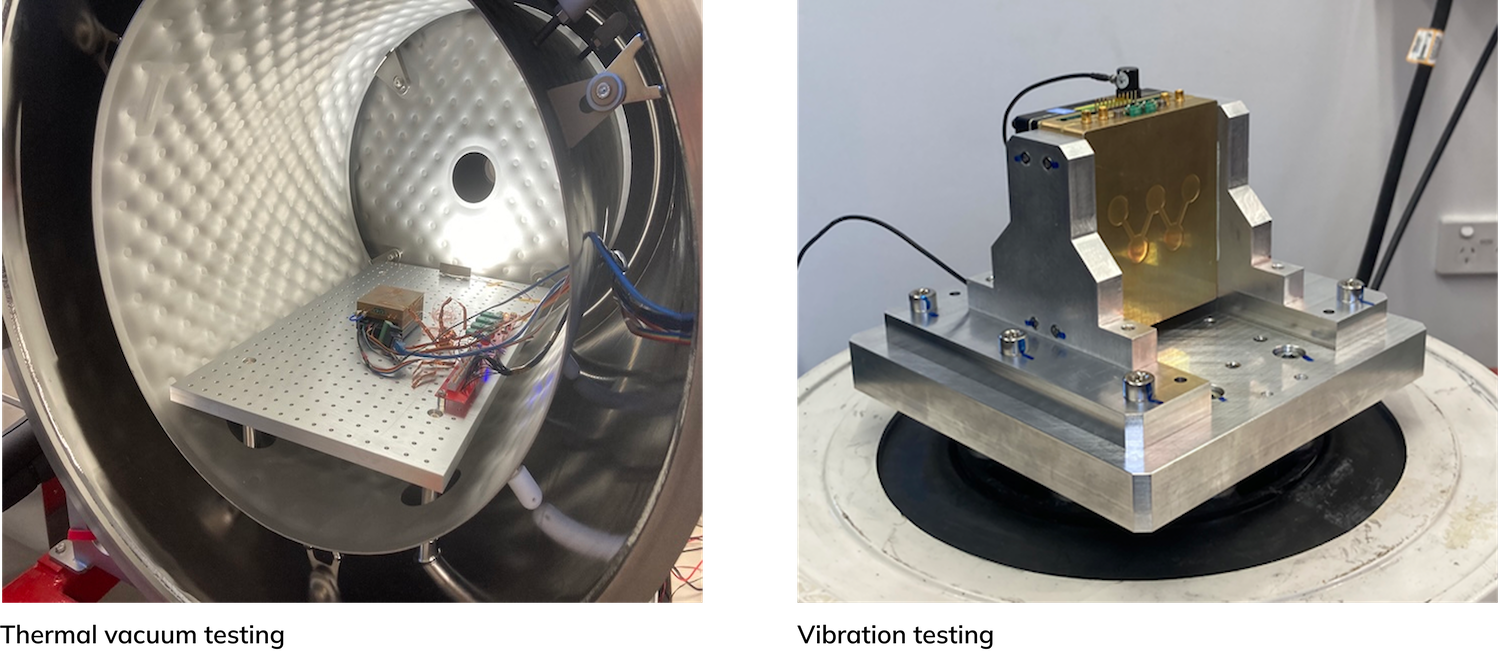
Following a full qualification campaign, the payload has now been approved by the Department of Industry and the Australian Space Agency. To qualify for the space environment, the payload underwent a comprehensive test campaign at qualification levels:
- Radiation: Withstood 30 krad(Si), equivalent to ~20 years in Low Earth Orbit or ~10 years in Low Lunar Orbit
- Vibration: Tested to 14.1 GRMS (NASA GEVS), exceeding all current launch vehicle profiles and up to 6× Falcon 9 levels
- Thermal cycling: 16 cycles between -30°C and +80°C, validating operation across extreme temperature ranges
- Thermal vacuum: Sustained full functionality across 7 days of vacuum testing under repeated thermal stress
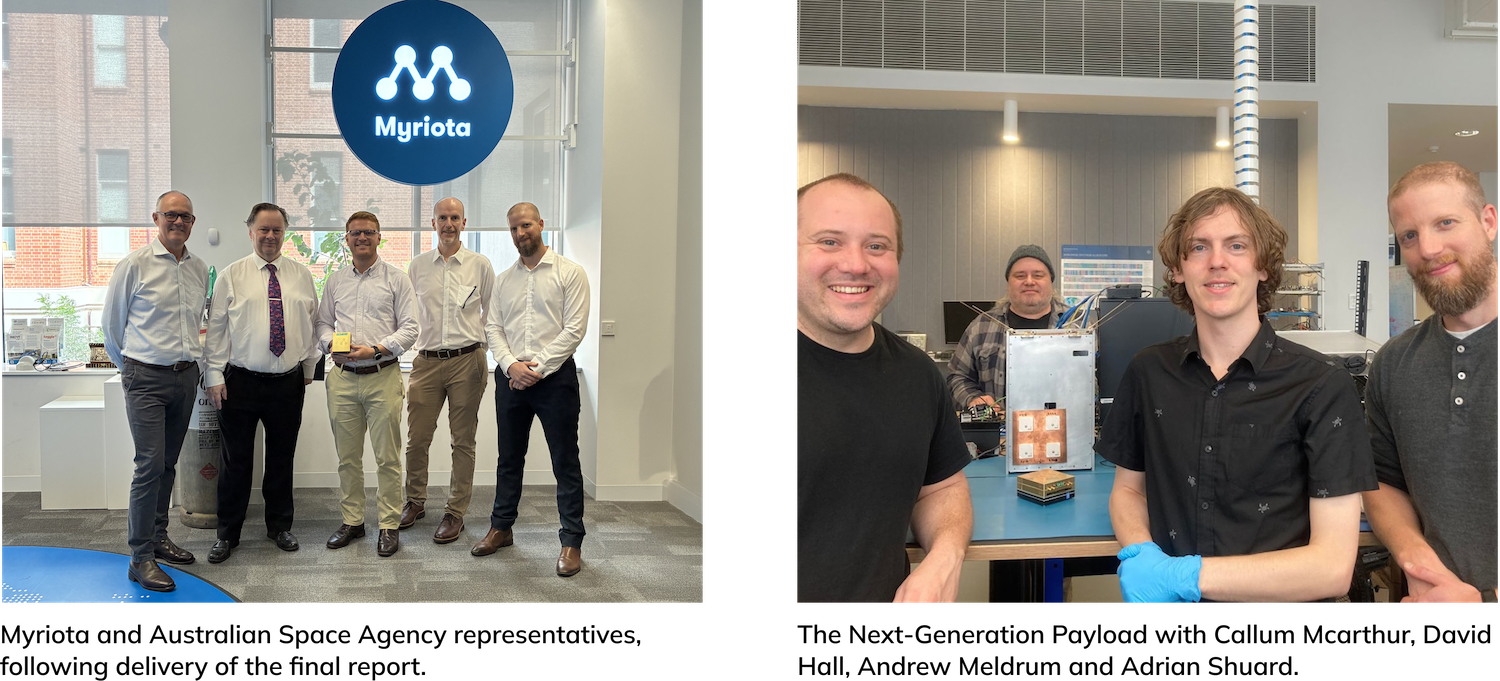
Adrian Shuard, Principal Satellite Engineer and project lead, said:
“This qualification campaign effectively validates the payload for sustained operation in low lunar orbit, with environmental margins that extend well beyond that. We’ve tested the payload to conditions that support long-duration missions in some of the harshest environments we can simulate. From an engineering perspective, this gives us confidence not just in performance, but in versatility – the same core architecture can now be adapted for a wide range of missions, including those operating much deeper into the solar system.”
Summary of technology features
- Compact, flexible payload with modular design scalable across satellite sizes.
- Support for multiple frequency bands, and able to connect thousands of nodes securely end-to-end.
- Suitable for high-altitude LEO and lunar missions.
- Hardened for extreme temperatures and radiation equal to 20 years in LEO.
- Designed for vibration levels six times higher than a typical SpaceX Falcon 9 launch.
About Myriota
Myriota is a global leader in satellite IoT connectivity. Over the past decade, the company has built an expanding satellite constellation, secured a substantial patent portfolio of over 170 patents, and raised more than $100 million in funding. It now delivers both connectivity and hardware that underpin critical operations across agriculture, utilities, logistics, mining, environmental monitoring and defence.
Myriota enables systems integrators, solution providers and OEMs to easily develop and deploy connected products that sense, track, and monitor assets even in the most remote environments. With teams across 19 global locations and deep partnerships in key markets, Myriota remains focused on its mission to connect the physical world for impact. myriota.com